Short-form creator
Turn a compact idea into a visually specific scene for a social post, teaser, or mood piece.
You get a clearer starting direction before editing, recording, or building a longer sequence.
ltx ai tutorial for beginnersBrowser video workflow
Ltx ai online free gives creators a direct way to move from a written scene idea to a visual video concept. Describe the subject, motion, setting, and mood, then refine the direction through focused prompt changes.
Choose your starting point
The same browser-first surface can support different creative jobs. Start with a clear outcome, then use the prompt and refinement loop that best matches your project.
Turn a compact idea into a visually specific scene for a social post, teaser, or mood piece.
You get a clearer starting direction before editing, recording, or building a longer sequence.
ltx ai tutorial for beginnersTest camera movement, atmosphere, and subject behavior before committing those ideas to a production pipeline.
You can compare visual concepts quickly and carry the strongest direction into your next tool.
ltx ai open sourceDescribe a shot with framing, action, lighting, and pacing so a rough concept has more than a generic visual prompt.
The scene becomes easier to discuss, revise, and sequence with collaborators.
ltx ai examples githubExplore alternate versions of a location, transition, or performance without arranging a full shoot for every idea.
You can use the online pass as a visual reference while deciding what deserves more production time.
ltx-2 ai video generatorSet the right expectation
An online prompt workflow is most useful when each pass has a job. Compare the browser route with a local setup so you know where it fits in your process.
Starting point
Online prompt workflow
A written scene description in the browser
Local production workflow
A configured local project and model environment
Setup effort
Online prompt workflow
Open the tool and begin with a focused prompt
Local production workflow
Install dependencies, models, and supporting software
Best first use
Online prompt workflow
Concept exploration, shot references, and visual iteration
Local production workflow
Repeatable experiments with deeper technical control
Hardware needs
Online prompt workflow
Handled by the online service surface
Local production workflow
Depends on your computer, memory, and graphics hardware
Control style
Online prompt workflow
Prompt-led direction with guided refinement
Local production workflow
More direct control over files, settings, and execution
Collaboration
Online prompt workflow
Easy to share a prompt-led concept for discussion
Local production workflow
Useful when the team already shares a configured workflow
Main trade-off
Online prompt workflow
Less visibility into the underlying technical stack
Local production workflow
More setup and maintenance before creative work begins
Good handoff
Online prompt workflow
Use the result as a reference for editing or production
Local production workflow
Continue directly into your own local generation pipeline
See the refinement loop
Specific details make an online video request easier to evaluate. The comparison below represents the change from a broad scene idea to a more directed visual brief.
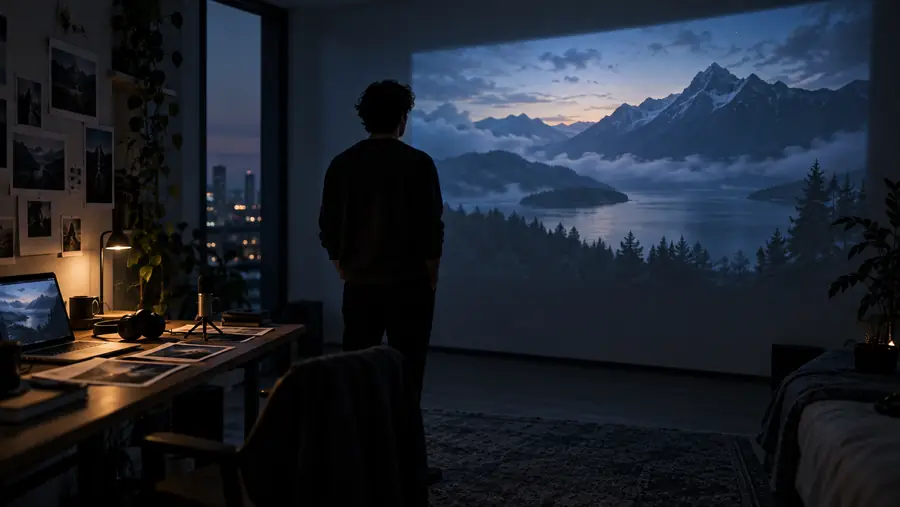 Broad idea
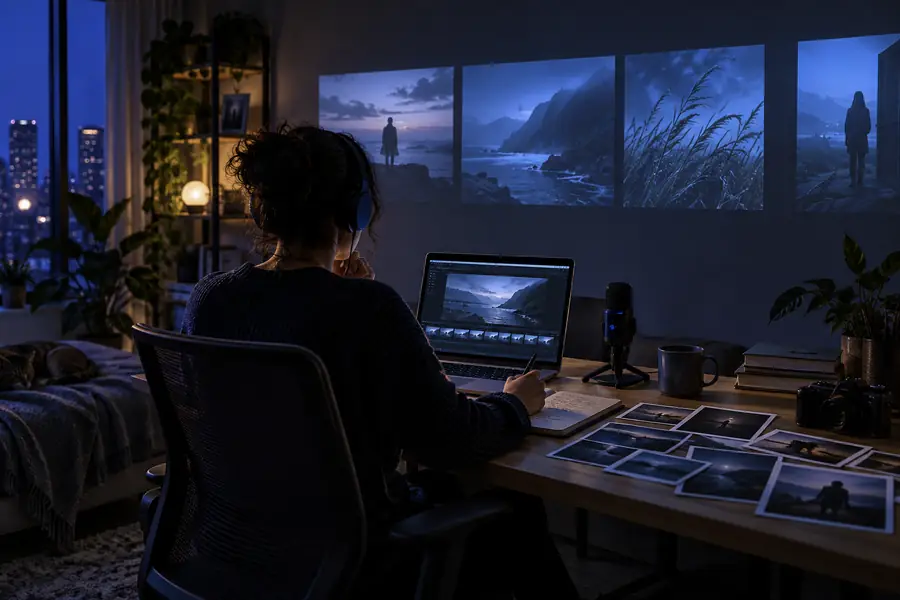 Directed prompt
Know the edges
A browser-based workflow removes setup friction, but it is not the right answer for every production requirement. These caveats help you choose the next step honestly.
Generating or exploring a clip is different from managing a finished timeline, sound mix, color pass, and delivery settings.
Workaround
Use the result as a reference or bring the strongest material into your preferred editing workflow.
A detailed description can guide the scene, but it cannot guarantee perfect identity, continuity, timing, or exact object placement in every pass.
Workaround
Break complex shots into simpler prompts and refine one visual variable at a time.
A browser route is convenient, but availability, processing behavior, and the visible controls are determined by the hosted surface.
Workaround
Save useful prompts and reference images so you can reproduce the creative direction later.
You may not get the same model files, settings, or inspection depth available in a self-managed environment.
Workaround
Use the online route for exploration, then move to a local workflow when technical control becomes the priority.
A repeatable creative loop
Treat each generation as one step in a compact creative loop: establish the scene, inspect the result, and make a deliberate change rather than rewriting everything at once.
Common questions
It refers to using an LTX AI video workflow through an online browser surface rather than setting up a local environment first. The practical focus is moving from a written scene description to visual exploration with less technical preparation.
An online route is designed to be accessed through a browser, so it avoids the local installation steps associated with a self-managed setup. The available controls and processing behavior still depend on the hosted service.
Start with the subject and action, then add the setting, camera movement, lighting, mood, and visual style. A focused prompt is easier to evaluate than a long description that changes several unrelated ideas at once.
It is useful for exploring scenes, shot references, and creative directions, but it does not replace editing, sound, color, or delivery tools. Treat generated material as a starting point unless it already meets your production needs.
Keep the core subject and visual intent stable while changing one detail per revision. Reusing clear language for framing, motion, lighting, and mood makes comparisons easier across prompt passes.